History's GatewayP101
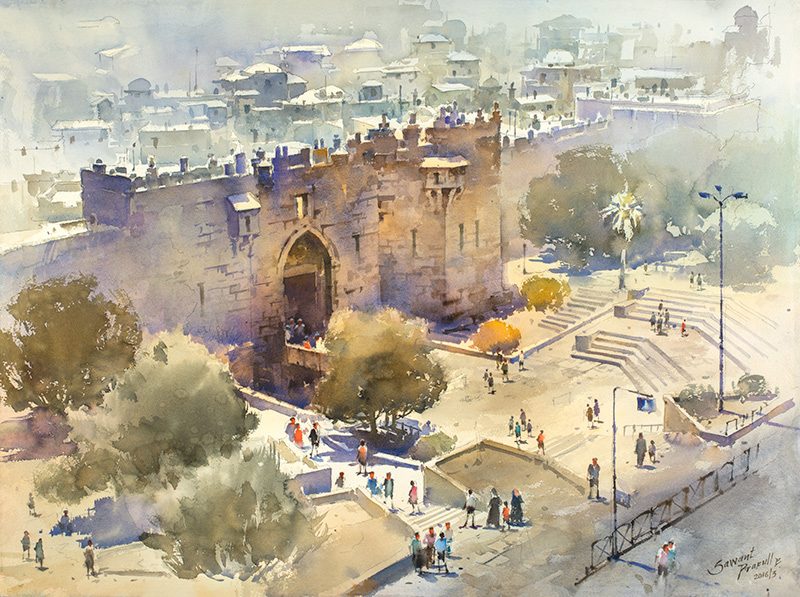
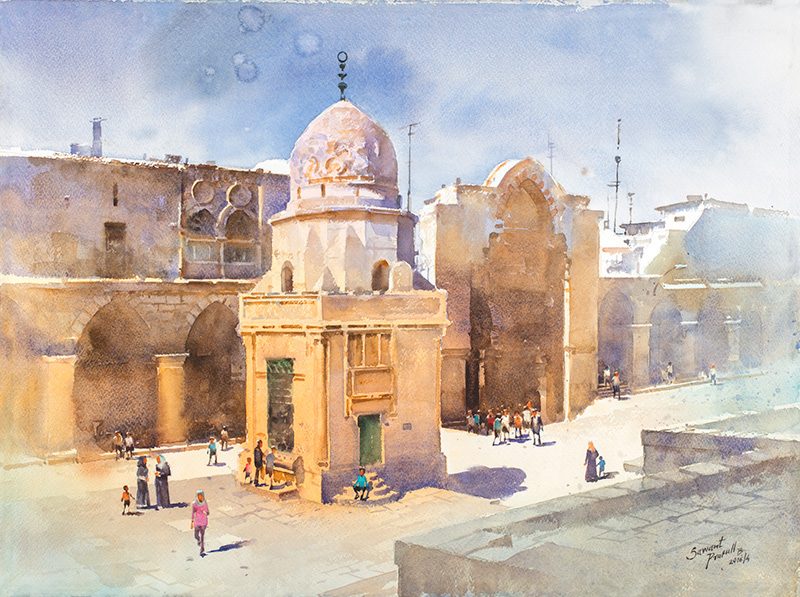
Jerusalem, Damascus Gate
Watercolour on paper · 75 × 53 cm · 2016
Original sold

Capturing the vast beauty of the Middle East
Twenty-four watercolours by Prafull Sawant, painted in 2016, travelling from the gates of Jerusalem to the rose-red rock of Petra, and from the balconies of downtown Amman to the hills of the north. Each painting takes one corner of the Kingdom or the Holy City and tells its story: a mosque on a hill, a market on a Friday, an echo in a Roman theatre. Together they are a portrait of a place that is proud of where it comes from.
Provenance
Selected originals from this collection are held in the Royal Court of Jordan, King Abdullah Art Collection, Basman Palace, Amman.
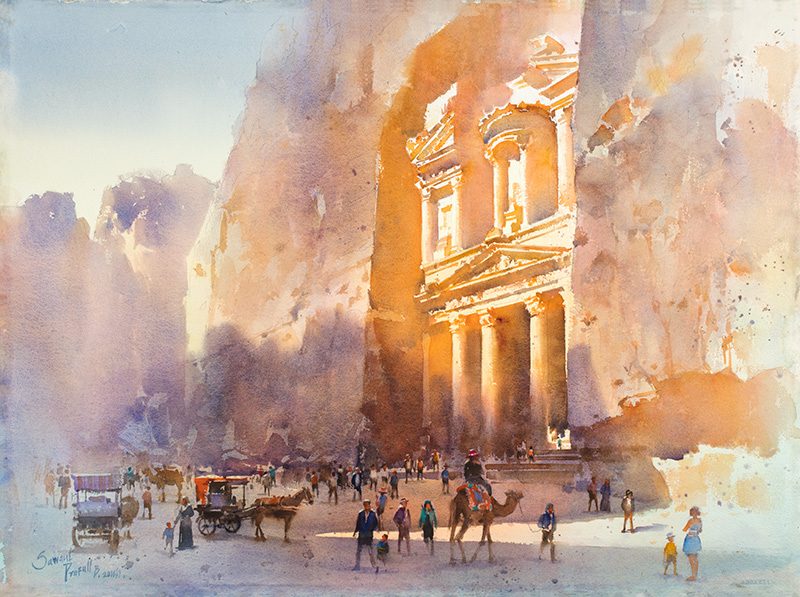
Petra's Treasury, Al Khazneh, is carved into rose-red rock, and most visitors know it in that colour. The artists wanted to paint it in full sun. A local Bedouin told them to come at 9:20 in the morning, and warned that the sun reaches the facade for only about fifteen minutes. The next morning they were there. When the sun hit, the rock turned from rose to gold. The title holds two meanings: the golden colour of the stone, and the rare golden time in which it can be seen.
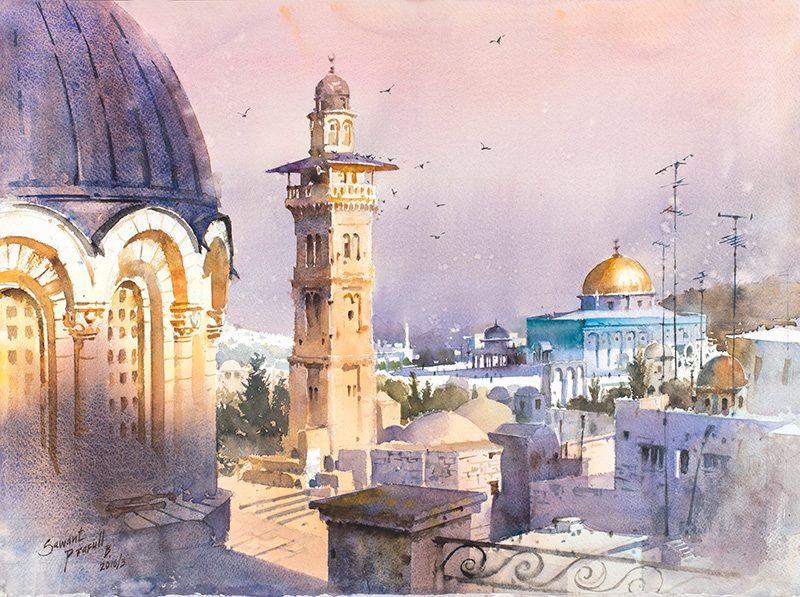
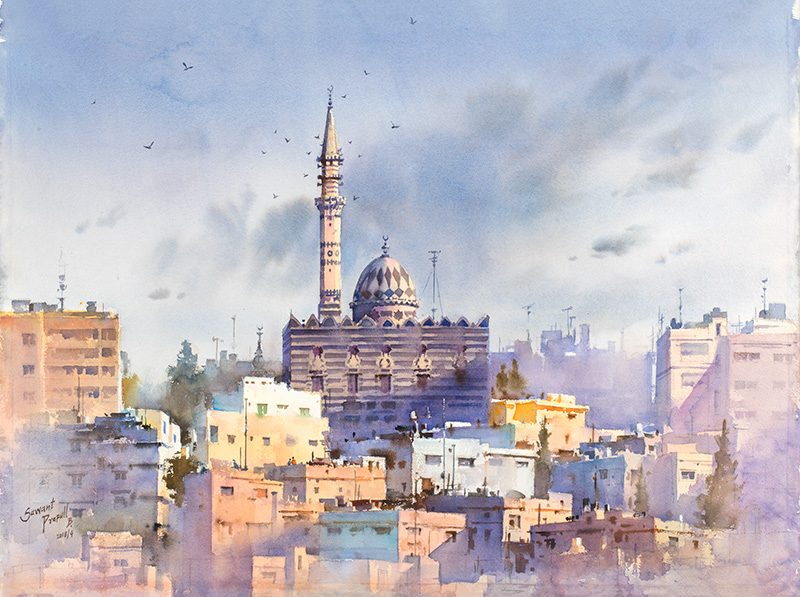
When a seed takes root, a tree follows, and so does everything that grows around it. Before this mosque was built, the Ashrafieh hill was sparsely populated; the mosque became the seed that drew people to live around it. From any hill in Amman, the viewer meets it across the skyline, a colourful building that could be mistaken for a small palace from a storybook. It was built in 1961 by Haj Mustafa Hassan Sharkas, known as Abu Darwish, who drew the design himself, brought the black and white stone from Syria and sold a piece of land to finish the minaret. The artist uses watercolour to nest the mosque in the hill, stretching it into the horizon as if it were part of the land itself.
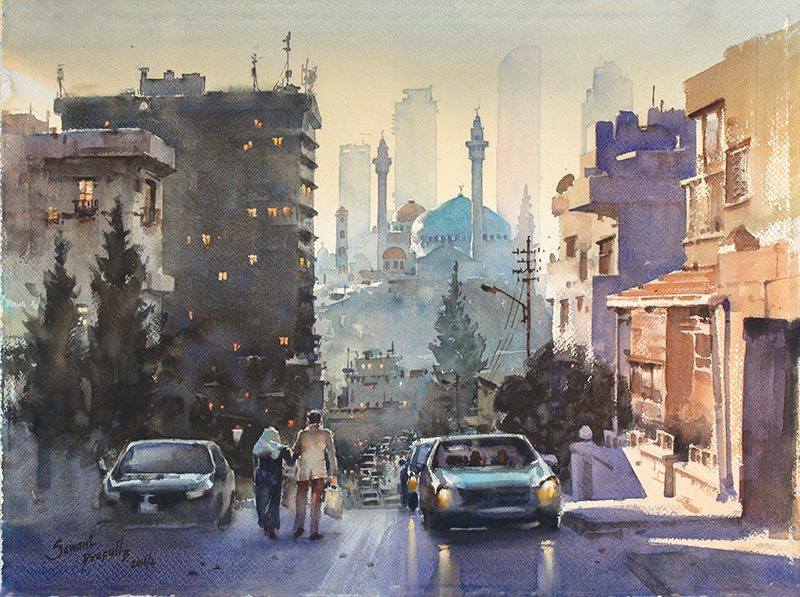
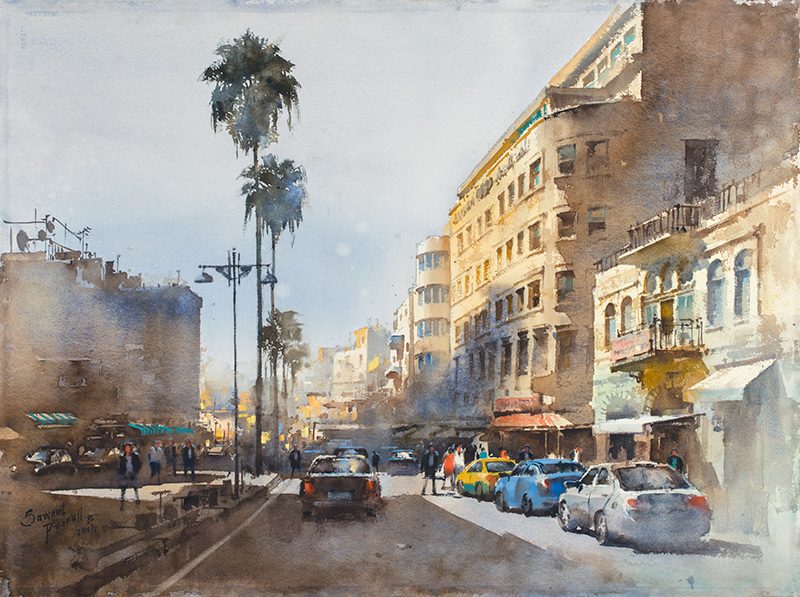
Stone balconies with arched windows, built in the 1920s, look down on King Faisal Street, the artery of downtown Amman. From it, alleys run to the textile and food markets, and the road forks north towards Abdali and up to Jabal Al-Weibdeh and Jabal Amman. One landmark here is the Duke's Diwan, once the main post office and later the Haifa Hotel, where Ammanis and artists came to talk and read. In their day these balconies were podiums for thinkers, who traded ideas while the street below traded goods.
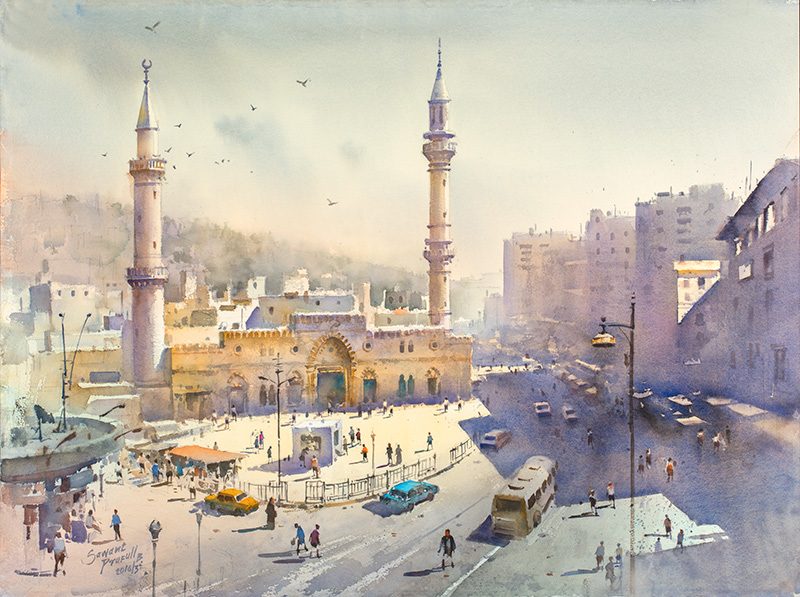
Al Hussaini Mosque is the heartbeat of downtown Amman, and old Amman grew up around it. Settlers needed water; here, people found a different kind of flow, where neighbours met five times a day, exchanged news and shaped opinions. It stands on an early Islamic site and was rebuilt by King Abdullah I in 1932. Its two minarets draw the eye first, and close by are the Bukharia souk for souvenirs and the Sukar souk for fresh produce and spices. For older generations it holds many memories; for the city, it is a monument to its own beginnings.
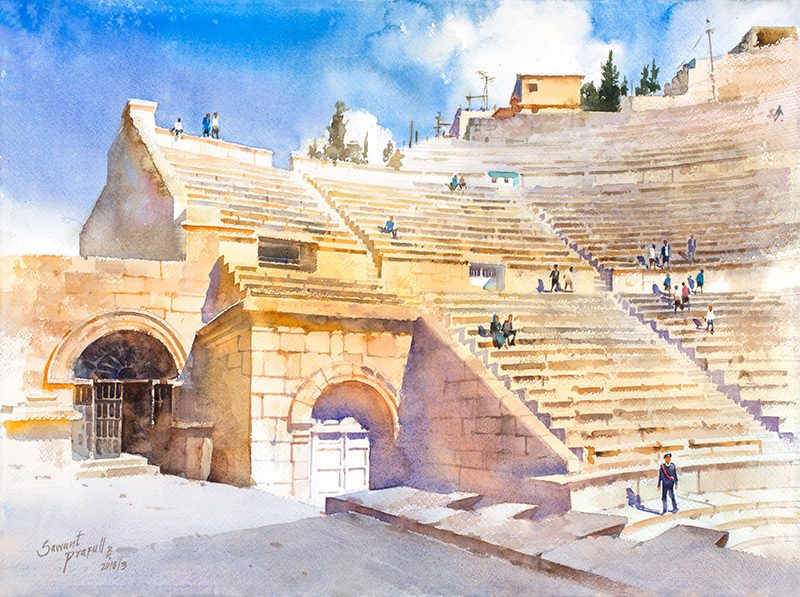
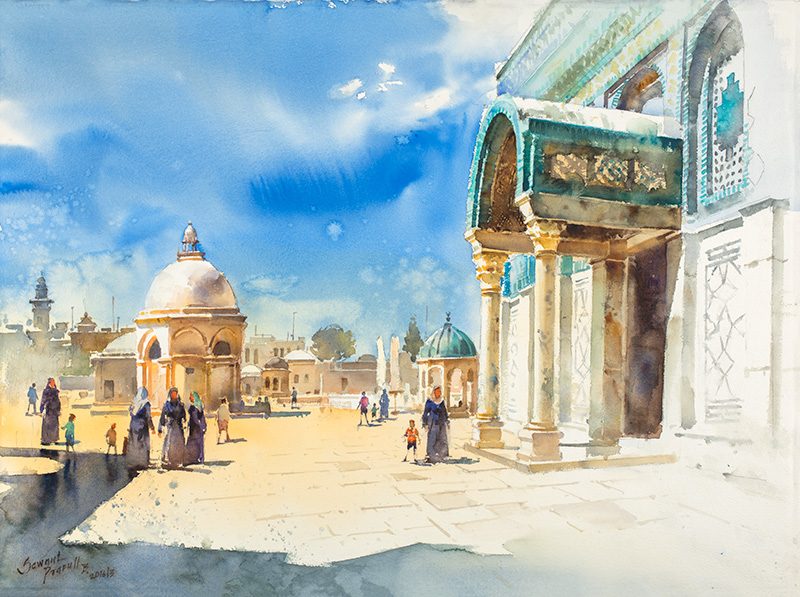
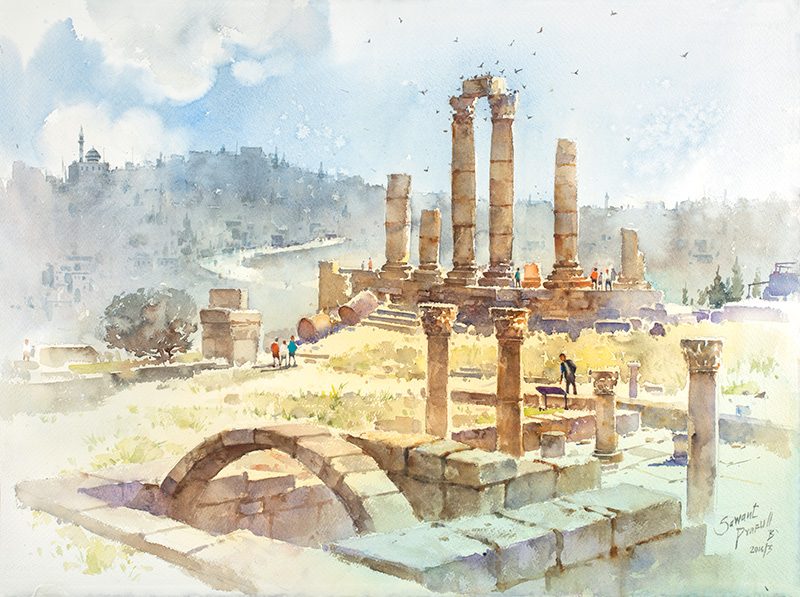
Downtown Amman is all bustle, until you step into the Roman Theatre and the noise falls away. The Romans understood acoustics and design, and today the theatre again hosts cultural and sporting events. High above it sits a three-storey house built in 1921 by Prince Nayef bin Abdullah, bought by Amman Municipality in 1994 and turned into a house of literature and poetry. Higher still, the Citadel gathers temples, a palace and layers of earlier cultures, a mixed bag of treasures left by everyone who built here.
Petra's Treasury, Al Khazneh, is carved into rose-red rock, and most visitors know it in that colour. The artists wanted to paint it in full sun. A local Bedouin told them to come at 9:20 in the morning, and warned that the sun reaches the facade for only about fifteen minutes. Before and after, the historic front stays in shade and the stone keeps its rose. The next morning they were there. When the sun hit, the rock turned from rose to gold. The title holds two meanings: the golden colour of the stone, and the rare golden time in which it can be seen.
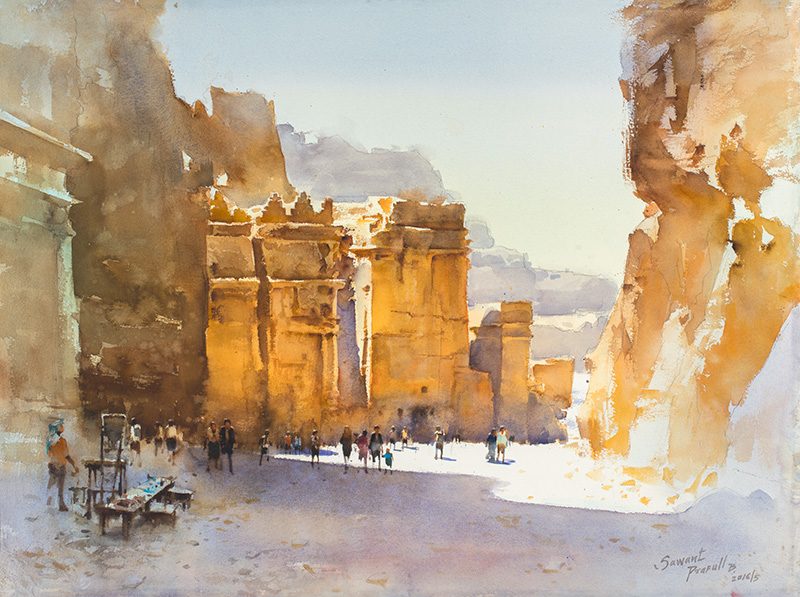
A city born at a crossroads takes on responsibility. Petra linked Syria and Yemen, Egypt and the East, and because it was hidden, like a jewel in the rough, its people could guard the caravans and feel safe at home. The painting takes its name from the ancient network of trade routes that joined East and West and carried silk, among much else. Its Street of Facades runs from the Treasury into the city, past the fronts of the homes and palaces of leading Nabataeans. Today, traders still sell souvenirs along it, keeping up the work of the ancestors who protected the trade.
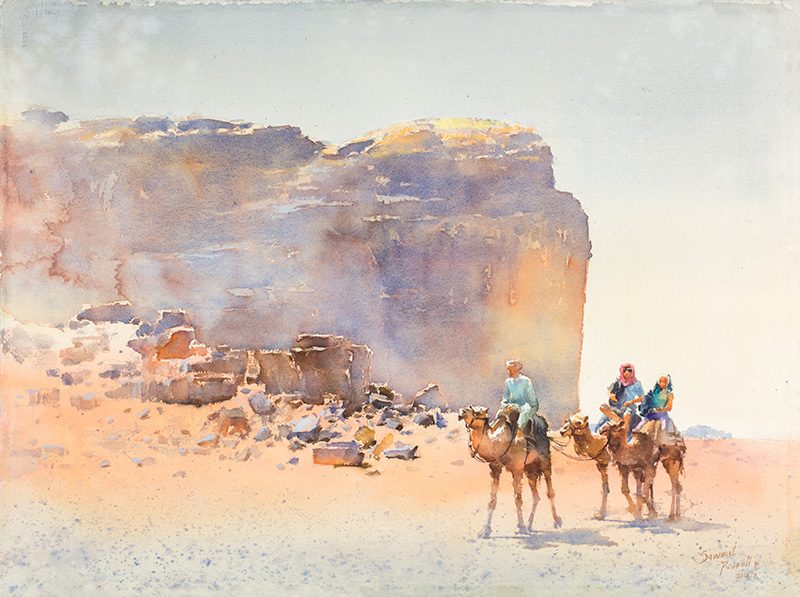
Directors have long chosen Wadi Rum for its strangeness and beauty, and cultures since prehistoric times, among them the Nabataeans, have left rock paintings, graffiti and temples here. In this painting the warm breeze is a brush. It moves the sand and redraws the surface, and the sand answers with the colours of the metals it came from: reds where copper is rich, violets where there is manganese. Light grains drift away like dancers; heavier ones stay close, like children holding balloons. What lies between is a kaleidoscope that surprises every visitor.
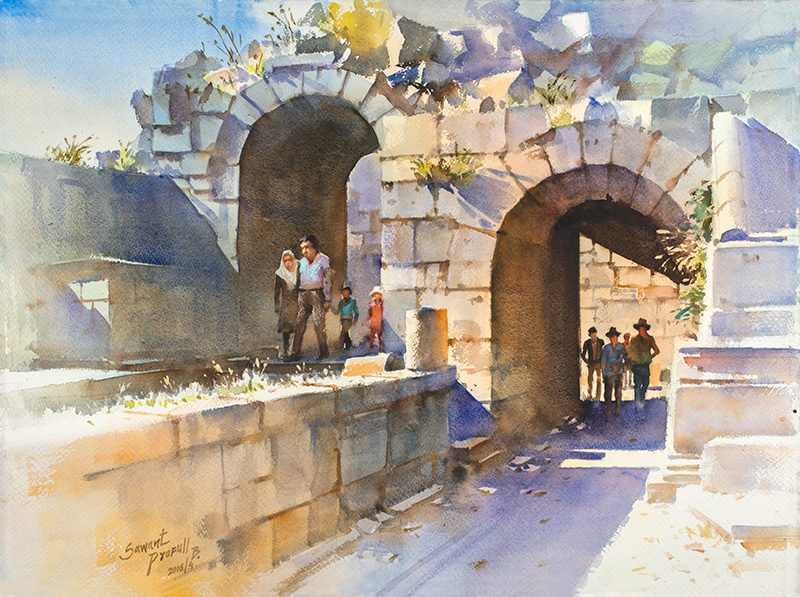
In the far north, Umm Qais looks across to Mount Hermon, the Sea of Galilee and the Golan Heights. It began as the Greek city of Gadara, passed to the Romans and later became an Ottoman village. Its most striking remains are the columns of the Byzantine basilica terrace. People lived among the ruins in Ottoman houses until 1986, when the village moved nearby to allow excavation, and in the 1990s some of the houses were restored as a museum and rest house. On weekends, visitors drift through the old and the older, and are quietly welcomed.
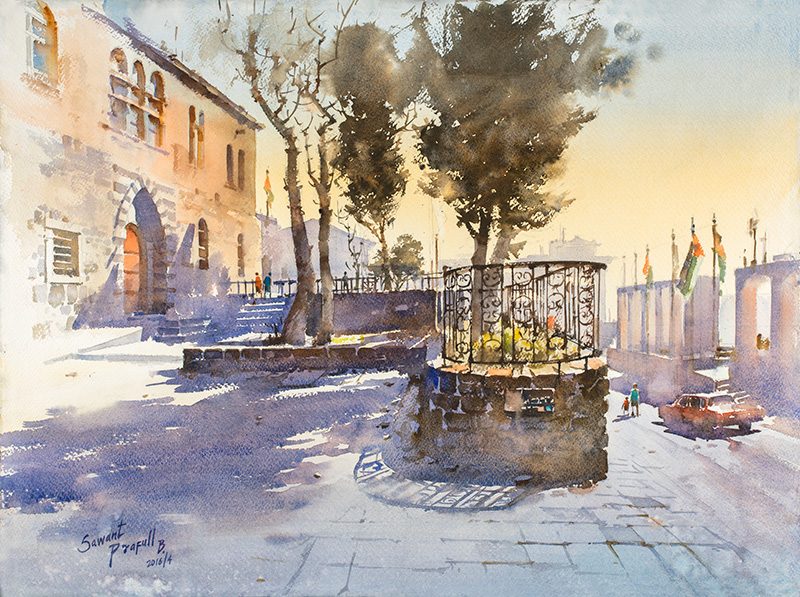
Irbid, in the north, has a long history, and its city centre sits on a hill, open to light and fresh air on almost every side. That is why freedom is the first idea that comes to mind on Dahr Al-Tal. The Ottoman administrative building on the hilltop, now the Dar Al-Saraya Museum, was once a prison, and leaving it feels like starting a new chapter. From the height, the visitor seems to own the horizon. Then comes the slow shift of shadows as the sun travels, and the leaves moving in the breeze: a quiet melody of freedom.
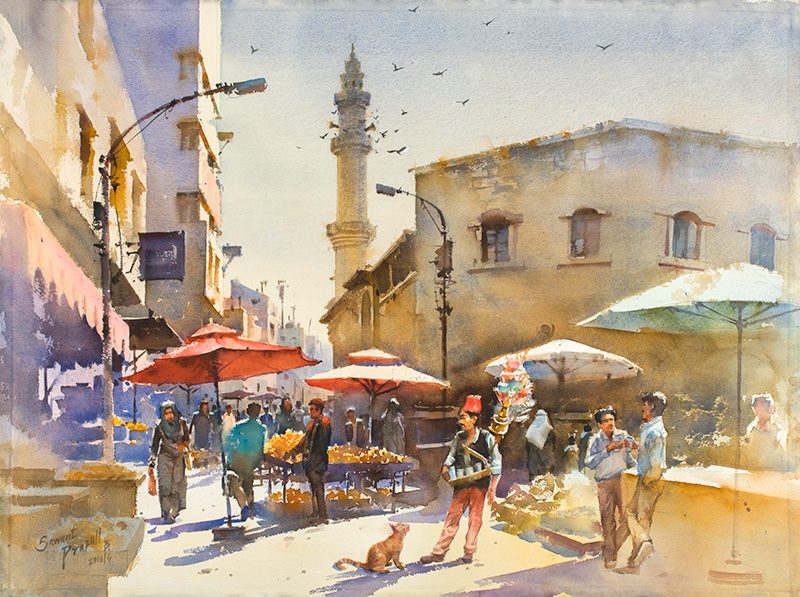
Steps lead down from Dahr Al-Tal to the produce market, the hisbeh, in the heart of Irbid. Irbid's Great Mosque stands behind, its windows holding on to an Ottoman identity, answered by the Mamluk mosque on the opposite side. On a Friday afternoon the market has a different pulse. Locals crowd the stalls for glistening fruit and vegetables, and a man in a Levantine fez sells old-fashioned licorice juice and fresh lemonade. A cold sip has become part of the Friday ritual, after prayer and before nothing in particular.
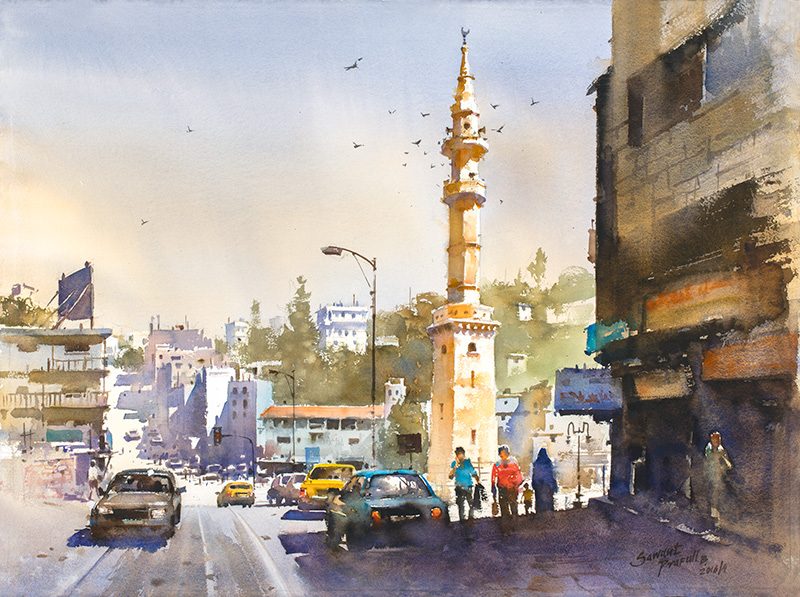
About seventy kilometres north of Amman, Ajloun sits among green hills. The painting centres on its mosque, built in layers by the Ayyubids, Mamluks and Ottomans, with Ajloun Castle small on the peak opposite. The minaret shows two eras: Mamluk below, narrowing to an Ottoman top. Usually the traffic hides the mosque, but on a Friday afternoon, once prayers are over and families head home, the streets are as calm as a summer sea, and the viewer can enjoy every detail.
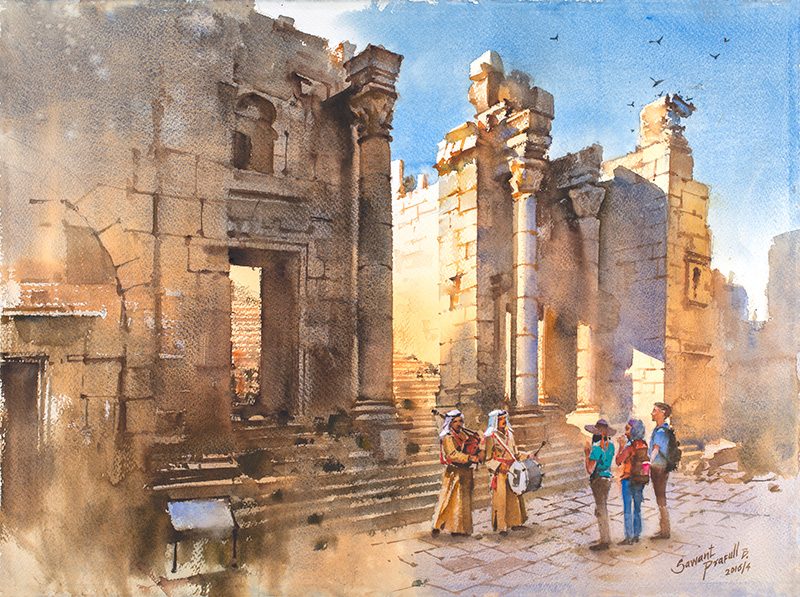
Entering the theatres of Jarash, you feel the presence of earlier generations without knowing where it comes from. Every sound dissolves into a soft puff of silence, then an echo, then a whisper, like a piano key decaying into a lull. Today's festivals are echoes of the ones held here long ago. The Romans must have studied sound closely and used it well: they knew how to please a crowd, and they counted on echoes to carry their name to cultures far away.
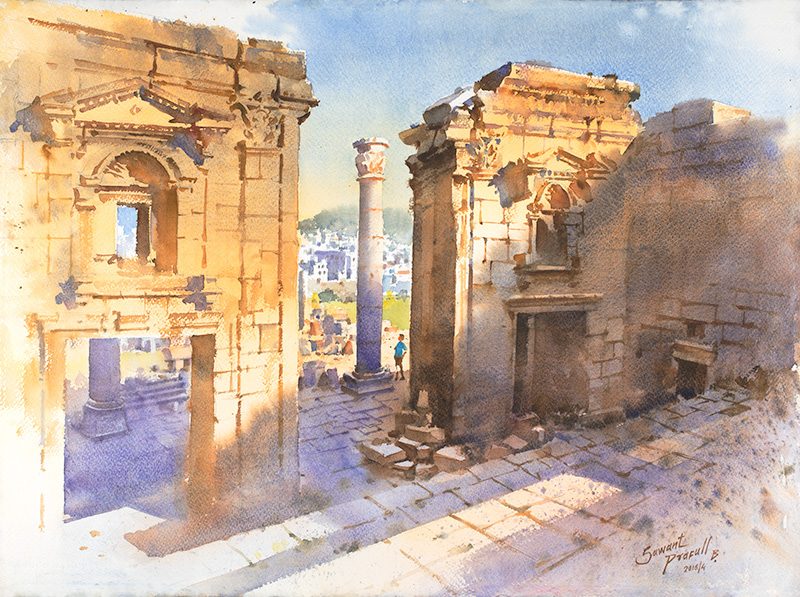
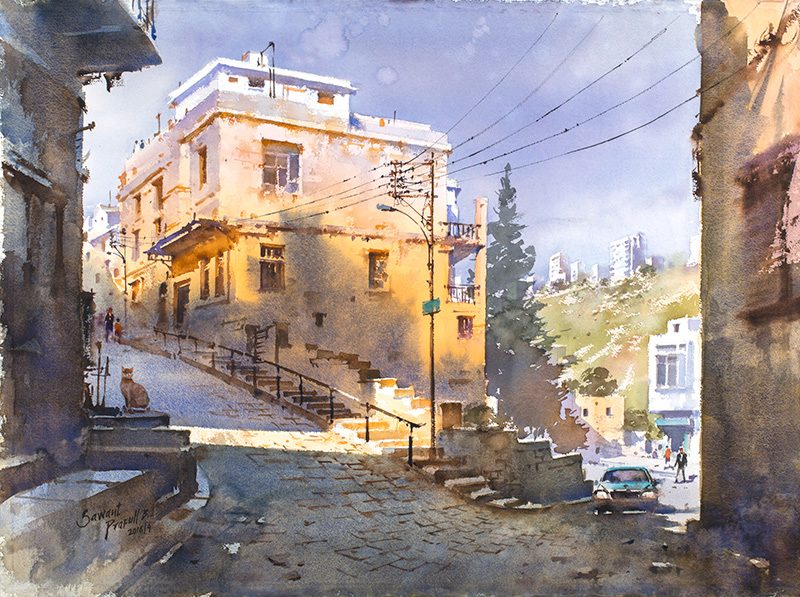
On this mountain, tradition says the story of Moses and Al-Khader ends in enlightenment: Al-Khader explains actions that seemed destructive but were done wisely, for the sake of settlement and stability. The artist answers with light, from soft atmosphere to dramatic contrast, catching translucency, luminosity and reflection. Salt itself is a hillside town west of Amman and was an Ottoman nerve centre in the nineteenth century. Being the westernmost city in Jordan, it is the last to see the sun leave each day. Its sun-kissed stone buildings, long arched windows and iron details remain.
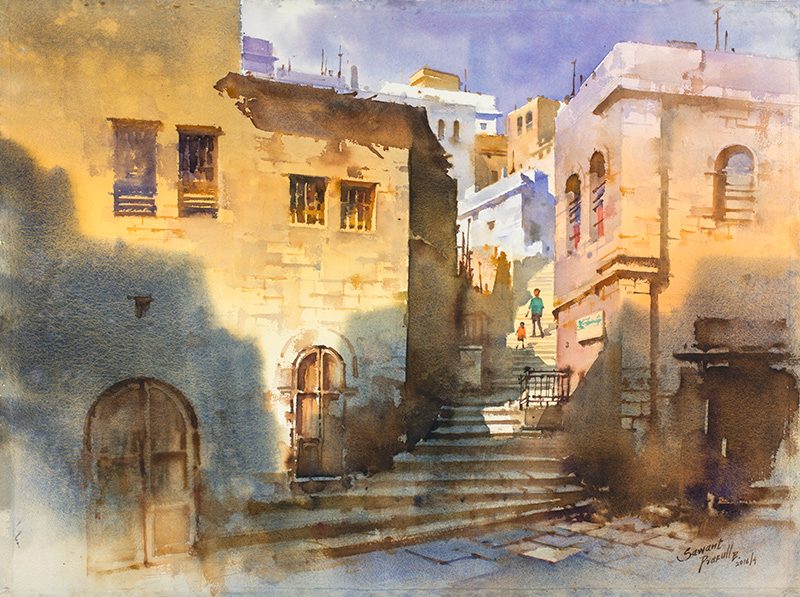
In the middle of Salt, a narrow winding street is topped with windows that look over the neighbourhood, many from the Ottoman period. Staircases end in it like small rivers flowing to the sea. Souks branch off it, selling daily needs, souvenirs and trinkets. The street, Shar' Al-Hammam, is named after a Turkish bath where merchants and locals spent hours in conversation. It became Salt's second commercial artery after the central square, built by Nabulsi merchants who bought shops by the dozen in the 1880s and lived above them. Merchants from Madaba and elsewhere joined, and the mix enriched the place.
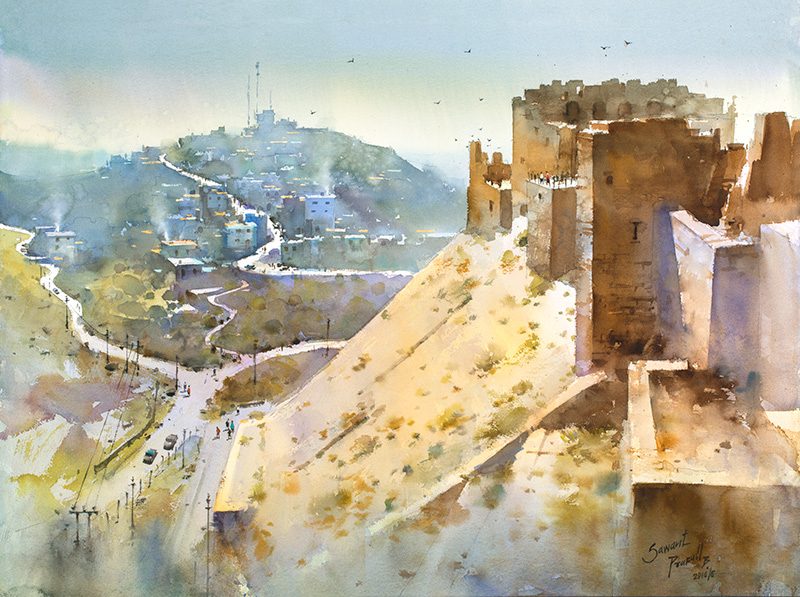
Political books and novels say that war is an art, and so is peace. Salah Al-Din ended long years of darkness, bringing peace to the castle and its surroundings with his siege of light. The viewer stands freely inside the castle, looking out over a city that has since enjoyed centuries of calm.
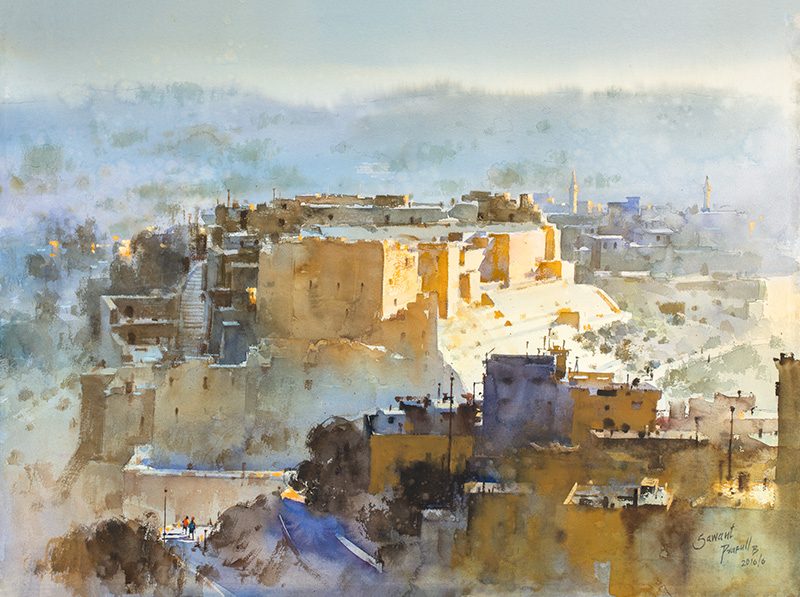
Perched on a sharp hill, Karak Castle greets passers-by with traces of history on its walls and doors. Work began in 1140 under the Crusaders, and the castle passed to Salah Al-Din in the late twelfth century. The painting spreads light with purpose, and its title matches: a siege of light as justice against violation, a positive closure. After a truce, an attack on a caravan between Cairo and Damascus led to raids along the Red Sea that threatened Makkah and Madinah. That dark era of piracy ended, in the story's words, with Salah Al-Din's siege of light.
Interested in an original or a numbered copy?
Inquire about this collection